
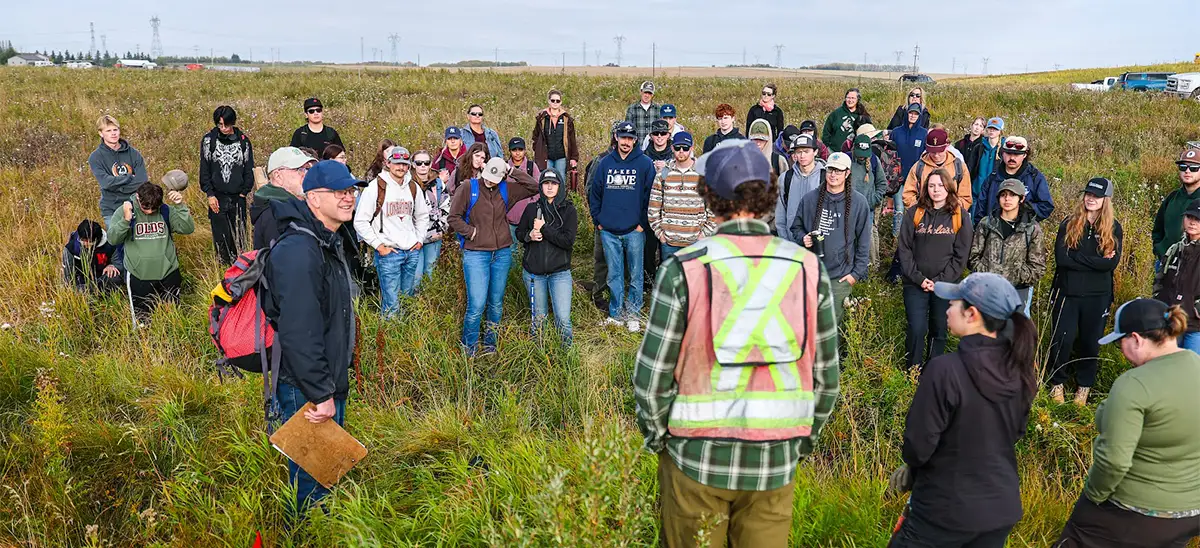
For Olds College of Agriculture & Technology students studying in the Environmental Science & Technology Diploma, the classroom doesn’t end at the door — it extends across the fields, wetlands, forests, waterways and working landscapes across Alberta.
For second-year students, the weeklong field experience had the class of about 40 students travelling throughout the region to examine how water, soil, vegetation and human activity interact across the province's diverse landscapes.
With Olds situated between multiple ecosystems, the region provides students with an opportunity to observe a wide range of environmental conditions in a relatively small geographic area. Across the field trips, students assessed stream flow, examined soils, identified plants and explored both natural and human-impacted landscapes.
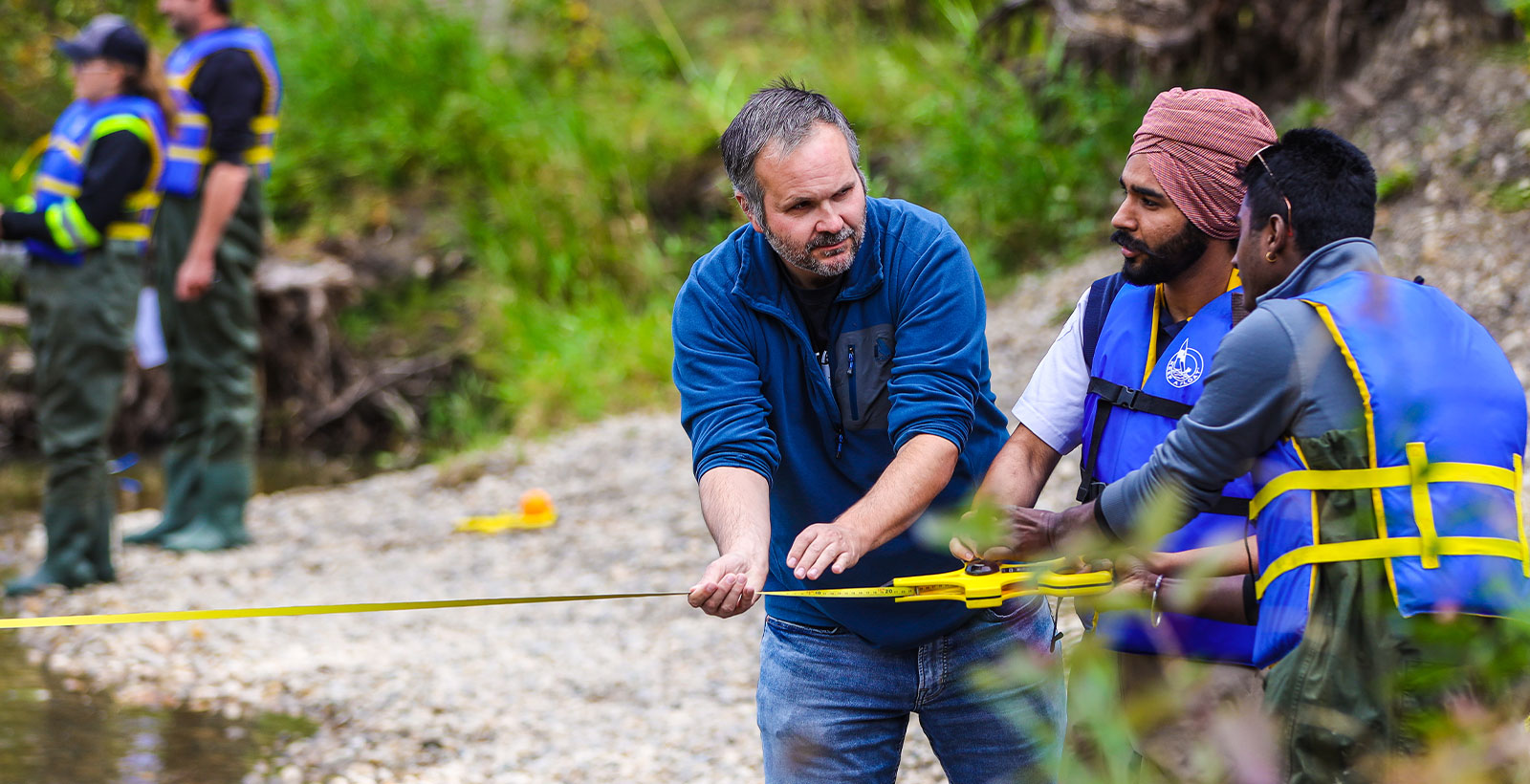
The week started with students immersed in the Little Red Deer River alongside a provincial government hydrometeorologist. Students competed in teams to get the most accurate flow measurements and also took samples for later analysis.
The following days, students explored a range of environmental considerations connected to development and land management. Activities included soil compaction assessments, examining soils in the context of potential well and subdivision developments and learning about environmental considerations associated with wind energy.
The East Tour brought students to several sites where they could see environmental challenges and management practices firsthand. Students observed a chemical dump site in Mountain View County and considered what remediation could involve, examined a wind turbine and its connection to energy production and explored plant identification in a dry, desert-like environment near the Tollman Bridge.
At a saline site, students examined how depressions in the landscape can concentrate water and result in high levels of salt. At another site, they also dug soil pits to examine soil layers and performed field tests on the soil to identify the soil type.
The West Tour provided another perspective, taking students through wetlands and forested areas while examining different soil types and plant communities.
Together, the field experiences demonstrated how environmental management is rarely about one individual component of the landscape. Water, soil, vegetation, wildlife, agriculture, development and energy production are all interconnected — and decisions in one area can affect the others.
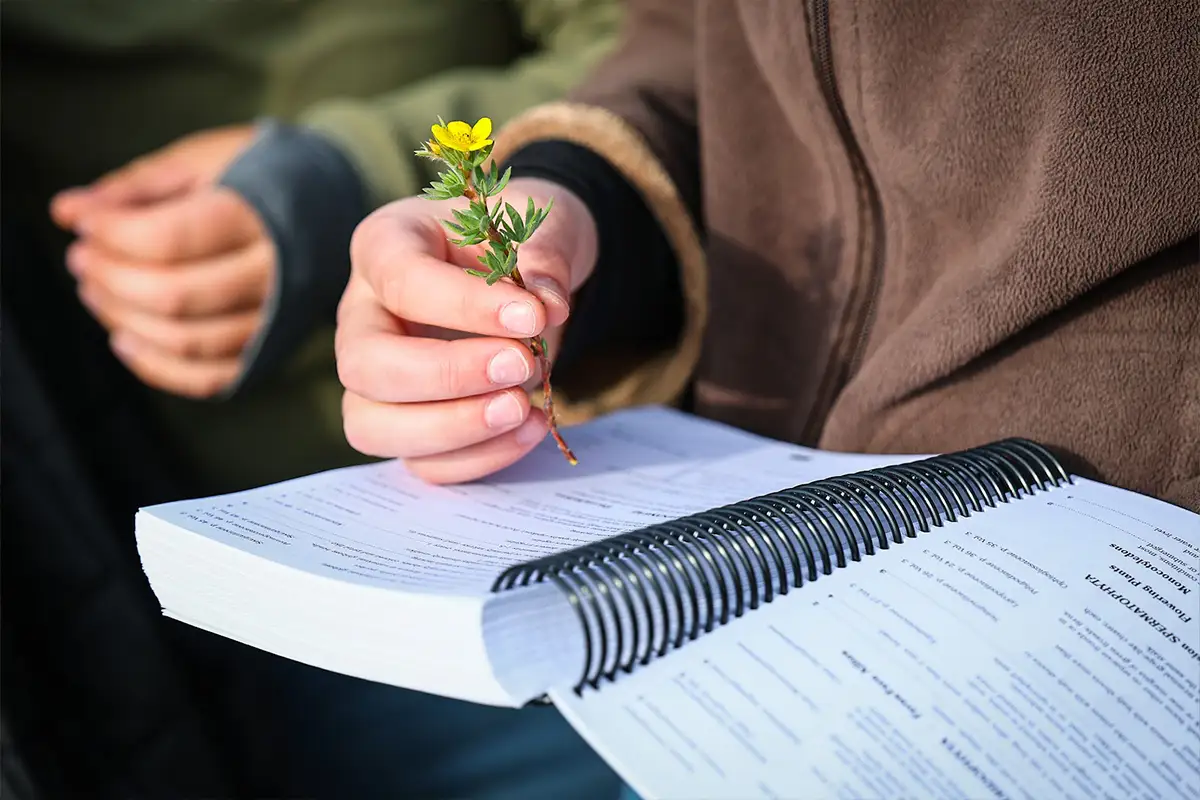
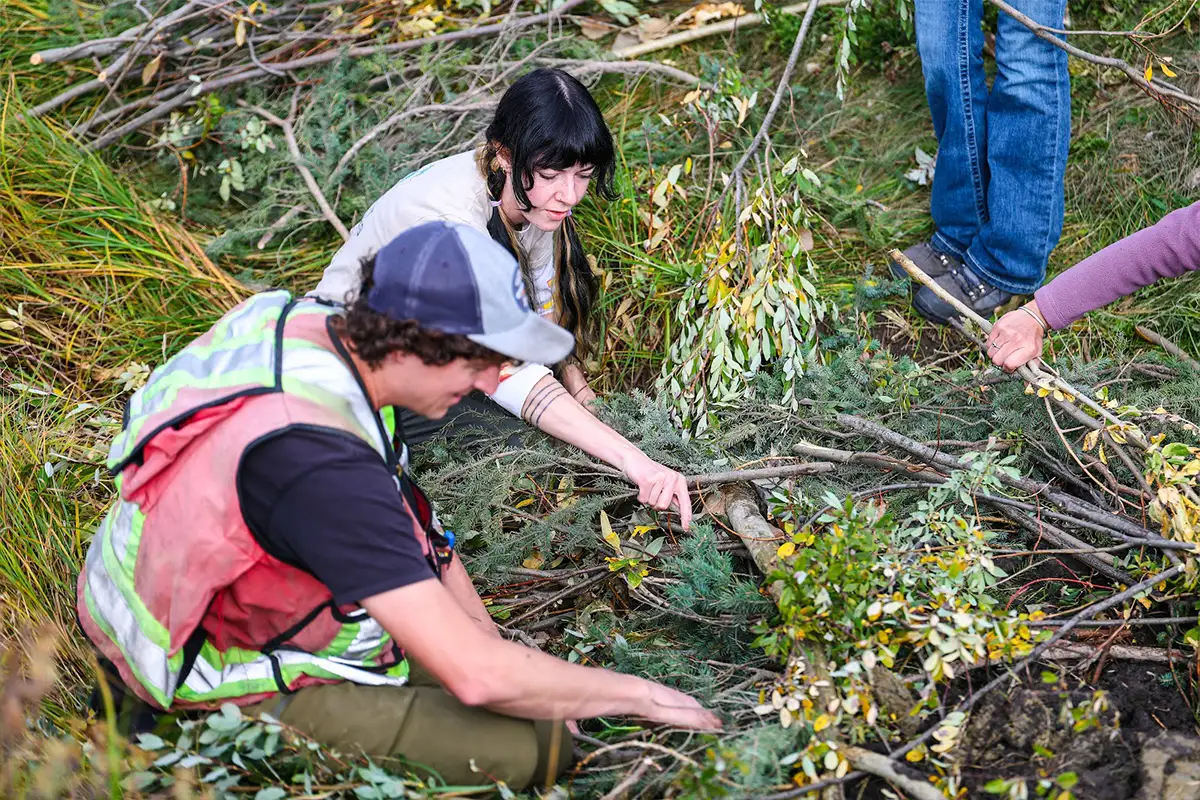
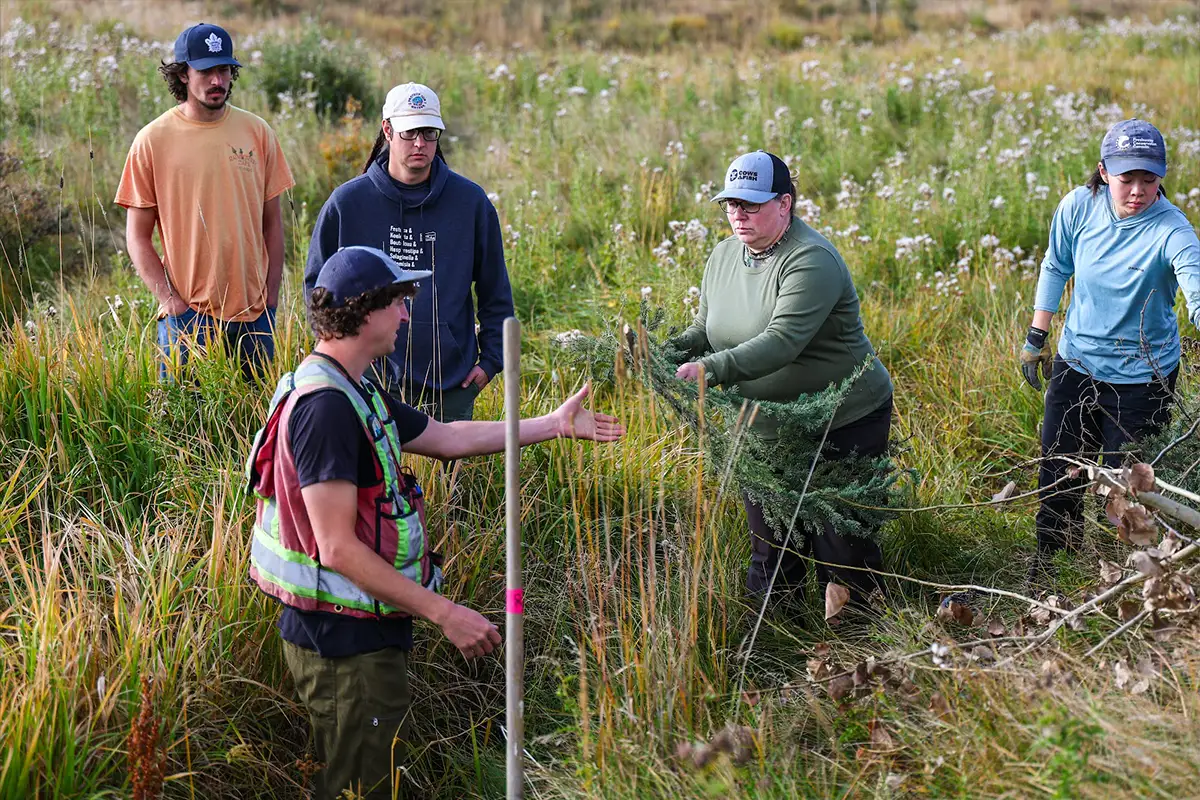
Students also explored restoration and reclamation practices on an extended part of the Olds College campus located near Carstairs, affectionately called the Pitstra Farm for the namesake who generously donated it to the College in 2019. The day's activities included plant identification in both reclaimed and unreclaimed areas. One of the techniques they employed was building Beaver Dam Analogues (BDAs) as a method of restoring natural hydrological processes in order to assist with drought-proofing and improve overall biodiversity.
The goal of these approaches is not simply to change the landscape, but to help move it toward a healthier and more natural state following years of grazing or other disturbances.
The field experience also connected students with professionals from Cows and Fish, as well as Freshwater Conservation Canada, who work directly in land and environmental management.
Mountain View County was among those involved in the experience. Loralee Grattidge, Sustainable Agricultural Specialist with Mountain View County, said having Olds College students learning about environmental projects in the region is valuable for the county as well.
“It’s just really cool to have Olds College in the county and have all these students learning about environmental projects,” Grattidge said. “For the county, this is huge to just have this opportunity and to be out here to learn as well.”
Grattidge is also a former Olds College student, having studied in the Land and Water program. Although the program has since evolved, she said the hands-on learning experience she received continues to influence her work today.
“For me, honestly, that program was really instrumental in what I do today, and especially the hands-on learning component was huge,” she said. “I still use a lot of that in my work.”
The connection between the College and local municipalities also provides an opportunity for environmental practices to be viewed through a practical, community-based lens. Representatives from Mountain View County and Wheatland County were able to observe some of the work and consider how approaches could potentially be adapted to their own landscapes and operations.
For students, the experience provides something that cannot be replicated entirely in a classroom: the opportunity to see environmental systems in context, ask questions about real-world challenges and develop the skills needed to assess and manage Alberta’s landscapes.
By taking students into the field, Olds College continues to connect education with the places and people who are actively working to understand, manage and restore the environment around them.
The two-year program provides students with a strong foundation in soils, vegetation, water, wildlife and agriculture through both theoretical classroom instruction and hands-on lab and field learning.