
Olds College Centre for Innovation’s (OCCI) crop research team is working with University of Manitoba researchers Dr. Yvonne Lawley and Dr. Emma McGeough to study the impacts of different planting dates on forage crop yields.
As fall arrives across the prairies and perennial pastures begin to fade, beef cattle still require high-quality energy and protein to stay healthy. Extending the grazing season using annual crops offers a promising path forward, but producers need clear guidance on how to manage these forages under local growing conditions.
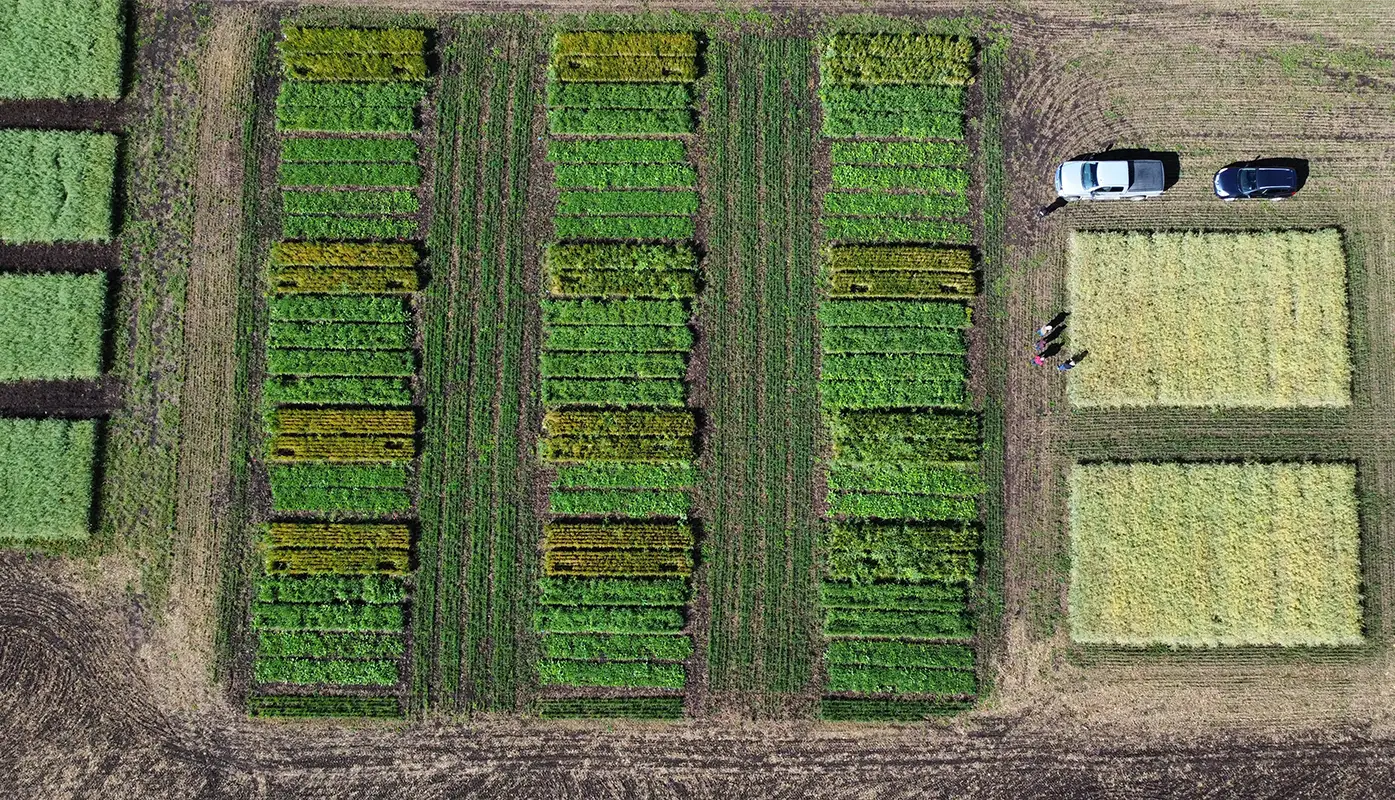
To help provide those practical answers, the OCCI crops team is evaluating how different planting dates in mid-June, July and August affect late-season forage performance. Using small plot trials on the Olds College Smart Farm over the 2026 and 2027 growing seasons, the team is managing and measuring three distinct blends of forage barley, proso millet, Italian ryegrass and forage radish to find the ideal balance.
Throughout the late summer and fall, OCCI researchers will harvest crops, measure the biomass and sample crop quality. Crucially, the team is also tracking nitrate concentrations in the forage tissue to help producers prevent nitrate toxicity — a common risk when grazing annual crops in cool, late-season weather.
By partnering with the University of Manitoba and gathering field data from the Smart Farm, OCCI continues to deliver practical applied research that can equip local and national producers with reliable information and assist them in planning and decision-making.
The Smart Farm is working towards providing producers with real-life applied research to help them make informed decisions about implementing technology in their own operations.