 Zachary Komarnisky, a talented third-year Bachelor of Digital Agriculture student at Olds College of Agriculture & Technology, is taking his research to the global stage. Komarnisky has been accepted to present his groundbreaking work on machine learning for precision agriculture at the prestigious 17th International Conference on Precision Agriculture, held in conjunction with the 11th Brazilian Congress on Precision and Digital Agriculture in Porto Alegre, Brazil, from July 11 to 18, 2026.
Working alongside Olds College instructor and researcher Dr. Felippe Karp, Komarnisky’s project focuses on revolutionizing the way the agricultural industry cleans and processes massive geospatial datasets. The project was made possible through a Mobilize grant from Olds College, which funded the research and development of the framework.
Modern precision agriculture relies heavily on vast amounts of data generated by equipment and sensors. However, this data is often affected by inaccuracies from operational inconsistencies, statistical anomalies and other outliers. As Komarnisky notes, every single inaccuracy hurts the ultimate analysis, making data cleaning and filtering a critical step for producers and researchers alike.
Currently, that data filtering process typically requires tedious manual analysis and/or highly complex filtering and parameter tuning. For data collected from a single field, this can mean a human spending many minutes or even hours reviewing more than 100,000 data points. Komarnisky’s research aims to change that.
Using data from the Hyperlayer Data Concept project, Komarnisky and Dr. Karp developed a machine learning framework to automate the detection and removal of invalid or anomalous data, while preserving relevant data. By cutting the massive datasets into chunks and feeding them into the models, they are training computers to perform human-style data analysis in a matter of seconds, ensuring the cleanest data possible without accidentally deleting valid data points.
"The end goal was to train a machine to perform high-level, human-style data analysis," says Komarnisky. "What takes a human upwards of 10 hours to review every single observation to manually remove anomalies can be achieved by our machine learning models in just seconds, radically scaling up our ability to move to the analysis stage of a research project with clean data."
Komarnisky and Dr. Karp successfully proved that their model could effectively isolate those anomalies. Komarnisky’s upcoming presentation in Porto Alegre will focus specifically on assessing the accuracy of this machine learning framework for complex geospatial data.
For Komarnisky, who grew up nearby in Carstairs, Alta. and spent time working on local farms, the presentation in Brazil is a massive milestone.
"I really never expected to get accepted to present at an international conference," he admits, giving credit to Dr. Karp, who first encouraged him to take on the project and suggested he apply to the conference.
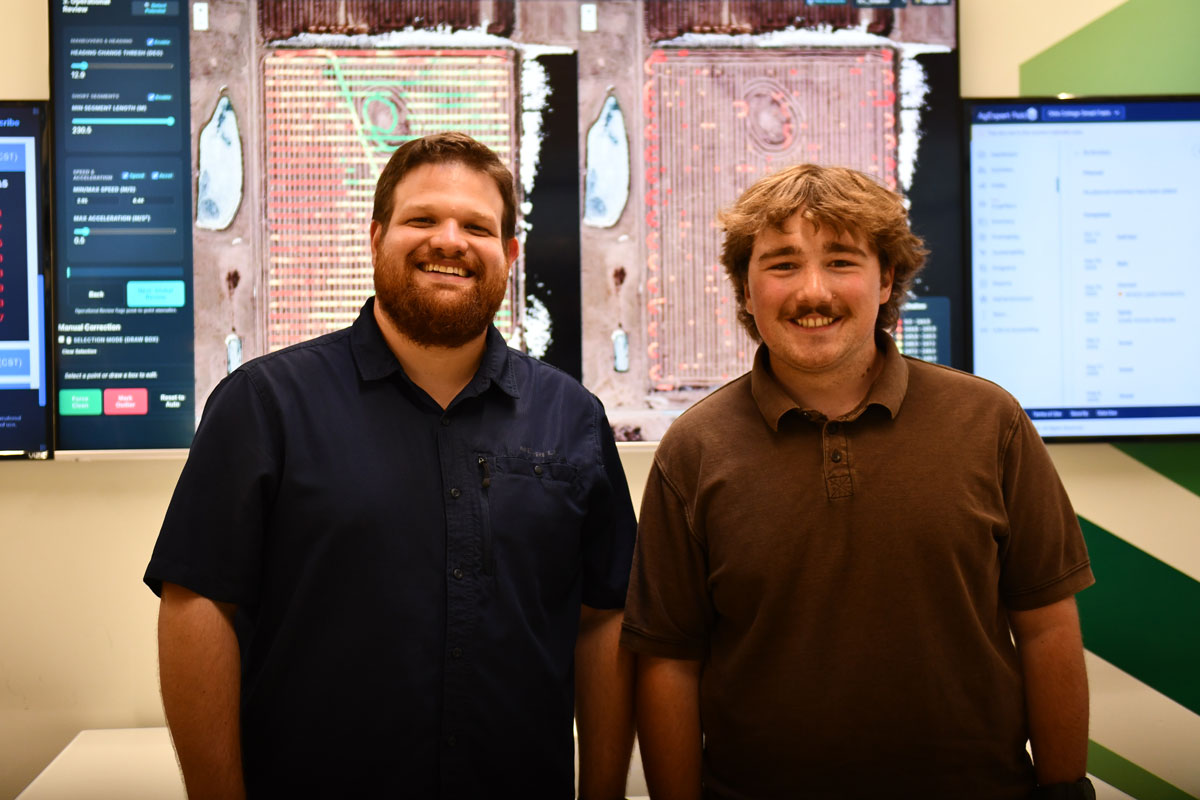 As Dr. Karp explains, taking on a mentorship and collaborative partnership with Komarnisky stemmed from a recognition of his unique combination of skills. “The agriculture industry has a talent problem it rarely talks about: there are very few people who can speak both the languages of agronomy and code. Zachary is one of them, and he is still in his third year of his undergraduate degree. The machine learning framework he developed requires a deep understanding of how precision agriculture equipment behaves in the field, what anomalies look like in context and how to design a model that respects that complexity. That combination of knowledge is something most professionals only develop during graduate training or when working in the industry, if ever. Olds College’s Bachelor of Digital Agriculture program is changing that timeline, and this presentation in Brazil is the clearest evidence of what that looks like in practice.”
Komarnisky credits the unique structure of his degree for assisting in his success. "The Bachelor of Digital Agriculture program is truly the best of both worlds," he says. "It builds a deep understanding of agricultural theory, agronomics and traditional farm practices while also providing hands-on teaching, helping us learn to use advanced physical and digital tools.”
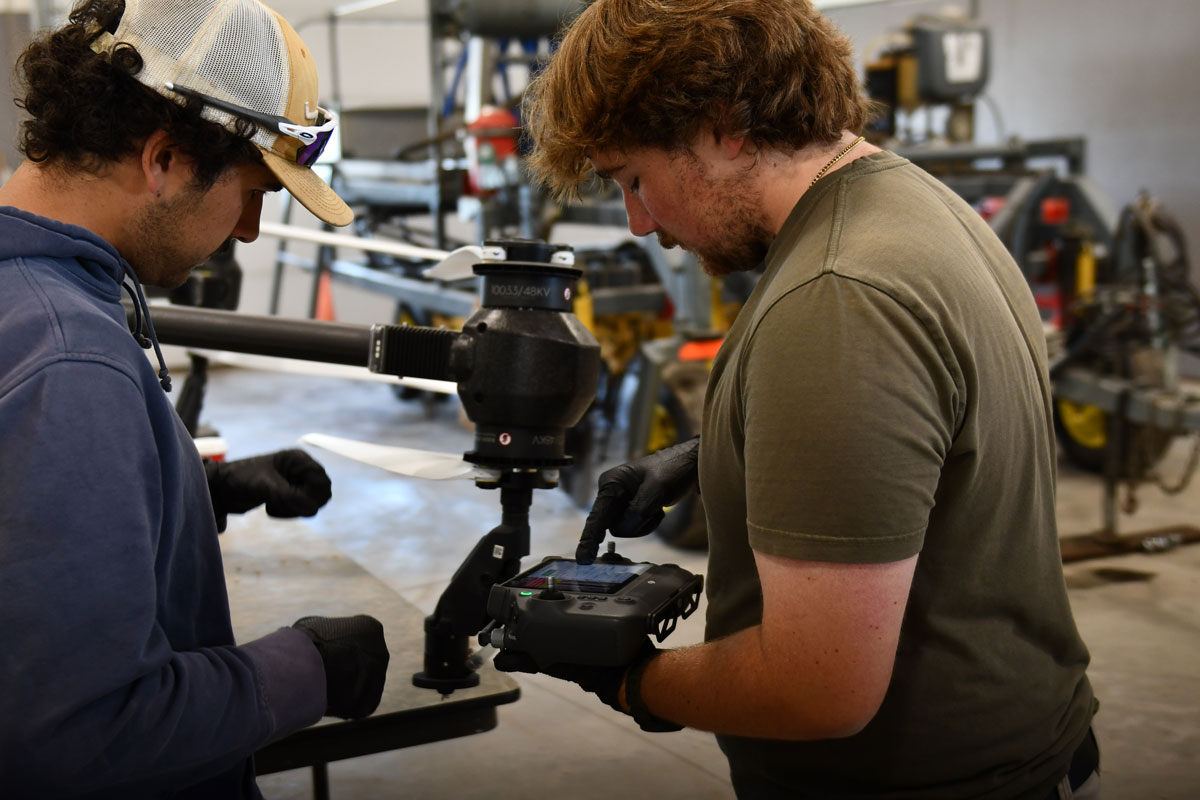
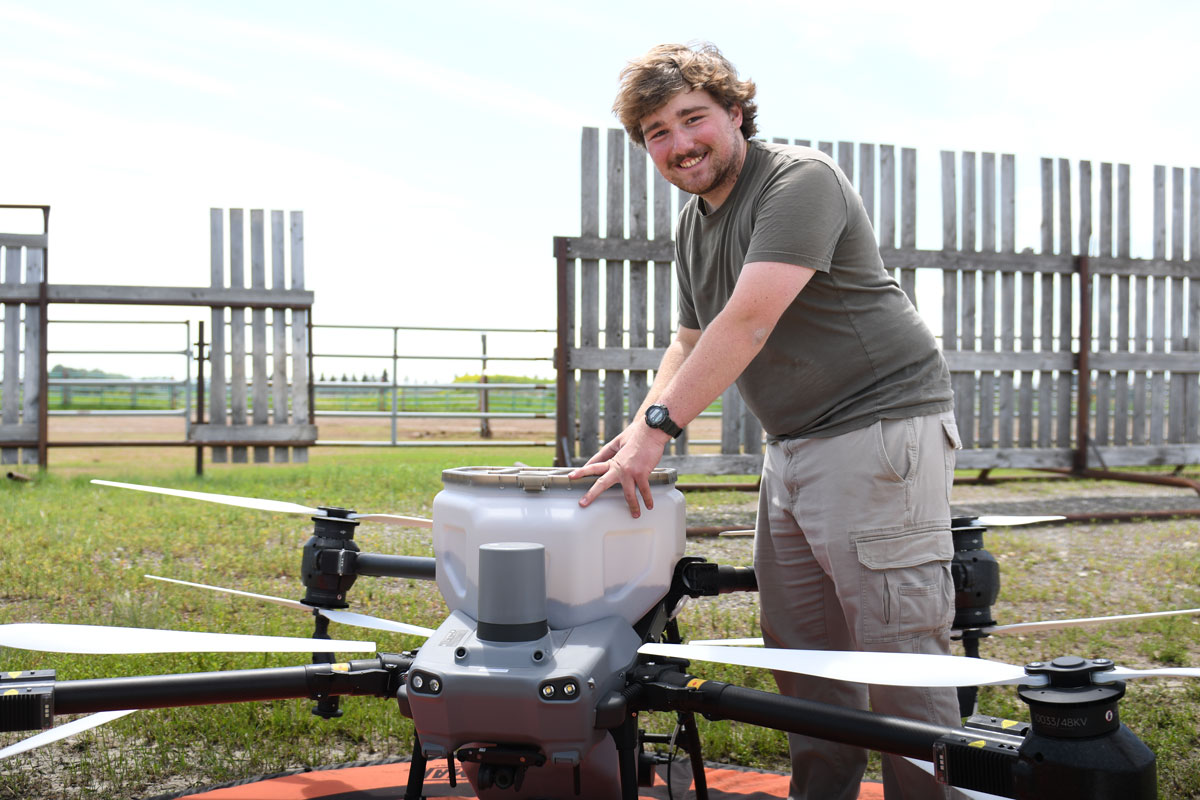
Currently in his second summer as a Research Assistant with the Olds College Smart Agriculture Applied Research team, he is enjoying the work, saying “I love the variety — one day I'm supporting drone surveying or seeding outside and the next I'm at my desk diving into data analysis."
Looking ahead, he hopes to forge a career in agricultural research and development, focusing on the intersection of technology and field practices.