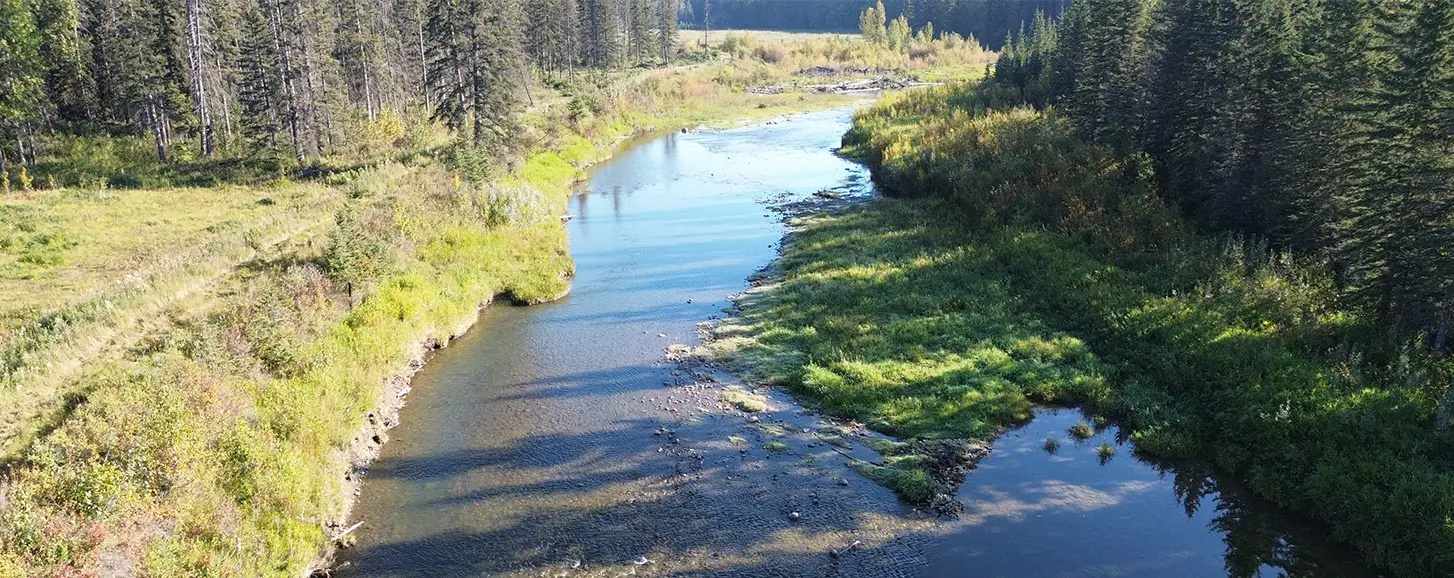
If you think about testing a river's health or quality, you may imagine a scientist in a lab coat peering at a test tube. While chemical and physical measurements can be useful, they may also be expensive, difficult to interpret or miss important ecological impacts and signals from human activities. Biomonitoring Watershed Health, a research project led by David Johnson, Instructor at Olds College of Agriculture & Technology, is using a different method to examine the health of our local waterways by surveying the aquatic invertebrates living in them. The project started in 2024 and is focused on creeks and rivers in the Red Deer River watershed, particularly those closer to Olds College.
This kind of assessment, called biomonitoring, is increasingly used around the world to indicate environmental conditions in waterways. The advantages to biomonitoring are significant. Much like the familiar canary in a coal mine, aquatic invertebrates (including insects such as mayflies, caddisflies and stoneflies, as well as worms, mollusks, mites, crustaceans and more) can also signal the quality of their local environment.
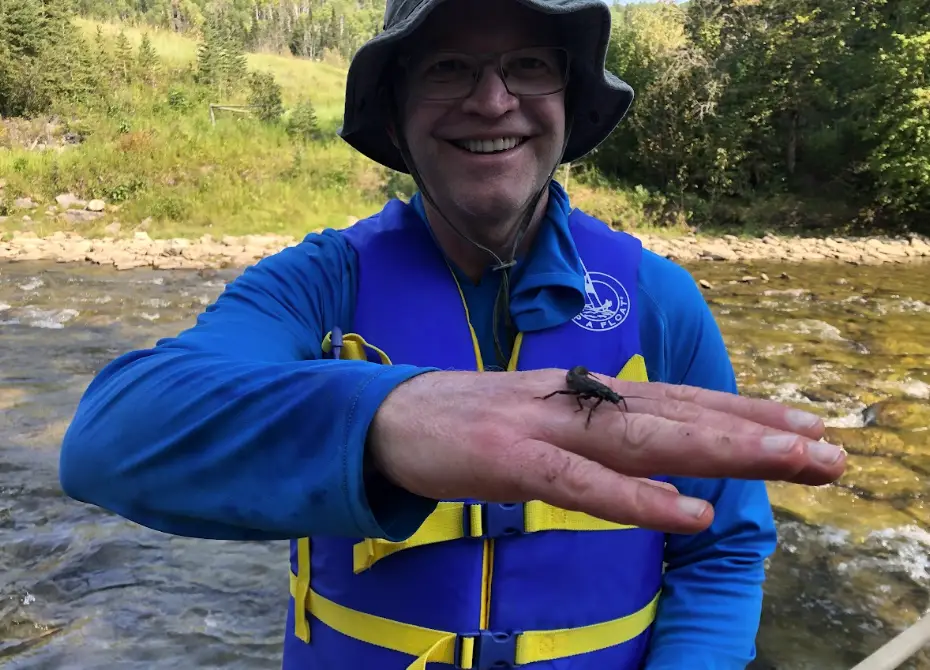
Unlike a single canary, however, these creatures are extremely abundant and very diverse, and have unique tolerance levels for changes in water quality. For example, a single site sampled for just three minutes in this study collected thousands of organisms, and subsamples of only five per cent of those organisms typically reveal over 40 different species.
The presence, absence, increase or decrease of certain organisms provides evidence of changes in water quality or conditions. While typical physical and chemical water analyses only show a snapshot of conditions at the time of sampling, surveys of aquatic invertebrates provide a better picture of the longer-term water quality.
Johnson has done invertebrate sampling with students for years, and is certified in the Canadian Aquatic Biomonitoring Network (CABIN). That certification allows him to submit invertebrate data to the national database’s permanent record, which is quality controlled and accessible to other researchers.
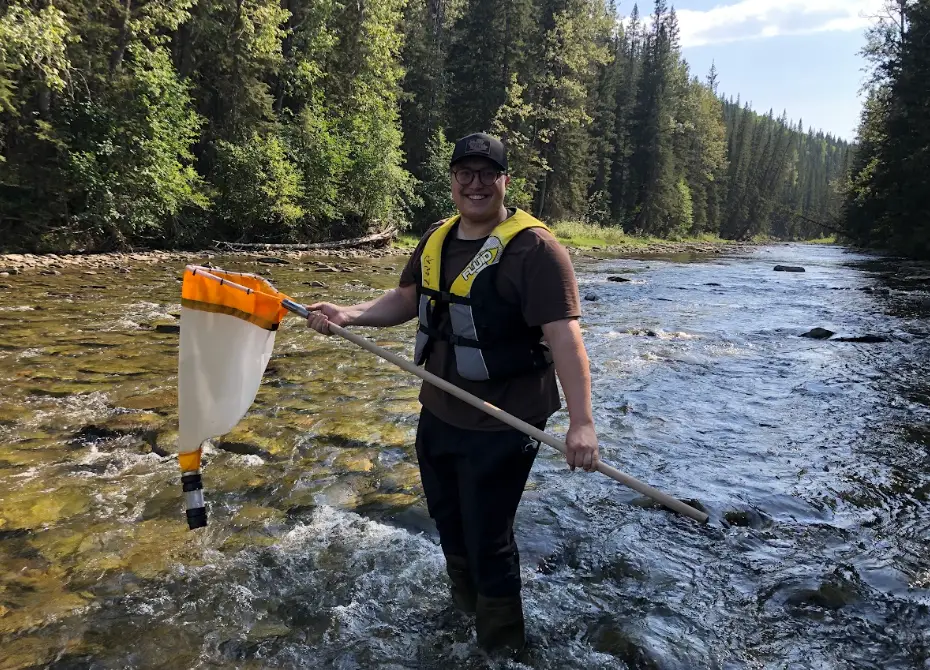
Currently, the data is being used to establish a baseline, to understand current conditions before further developments or impacts occur, so the researchers are just documenting the diversity and abundance of invertebrates. Sampled sites will serve as references that can be used to compare with data in the future as well as to other sites that should have similar invertebrate communities. The data will help determine whether human activity is having a negative impact on aquatic ecology and our water resources. However, it can also indicate if and how restoration efforts and improved management practices are helping to improve water conditions.
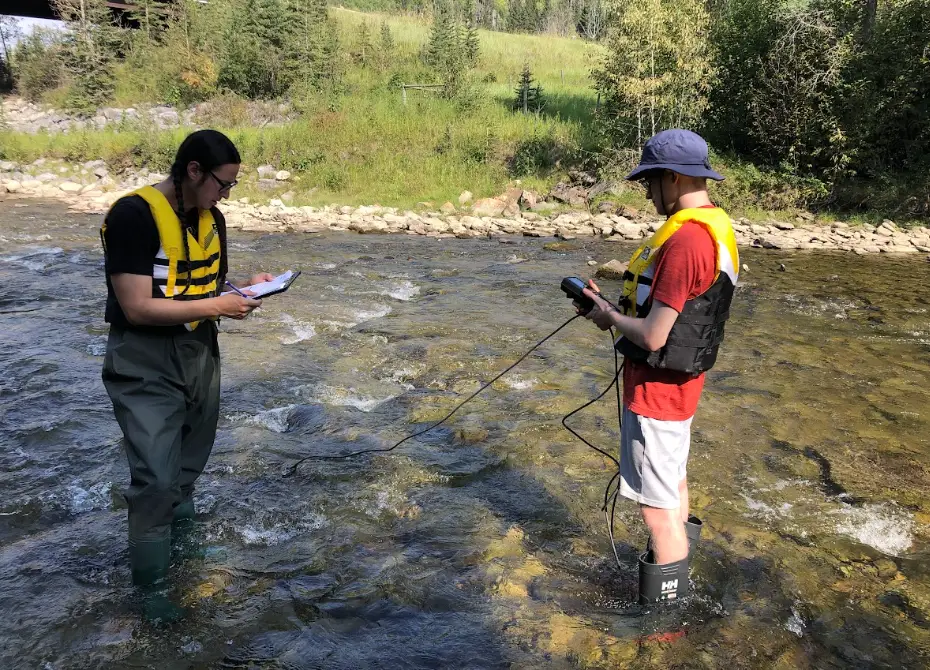
Olds College students had many work-integrated learning opportunities with this project and assisted with data collection at the sites. They prepared and cleaned supplies and materials, took survey measurements of the streams, as well as documented the sites with photographs, assisted with measurements of water quality, water velocity and depth, substrate materials, shading and riparian vegetation. There’s a significant amount of equipment and procedures and time required just for assessing one site!
This project also collaborates with the Red Deer River Watershed Alliance (RDRWA), a non-profit society designated as the Watershed Planning and Advisory Committee for the Red Deer River watershed. Olds College and the RDRWA have a history of collaboration on education and research projects. The RDRWA is using some of this data as they roll out their most recent State of the Watershed report.
Initial results have shown that the local creeks and rivers provide habitats for an amazing abundance and diversity of aquatic organisms. As the project continues, the baseline data from this first round of collection will be essential for comparison with future data collection. It will also enable researchers to assess ecological conditions, evaluate the positive and negative impacts of human actions and guide improved management practices for the watershed.
Our dedicated faculty members bring a wealth of expertise from various fields, making them valuable partners for research initiatives showcasing insights and solutions for real-world challenges, fostering a culture of innovation and learning within our institution.