
Isabell Reutter and Ireland Kyrzyk-Smith, Master's students in the Animal Science Program at the University of Manitoba, spent the week of August 10-14 interning with the Technology Access Centre for Livestock Production (TACLP) at Olds College of Agriculture & Technology. They were the first two student interns with the TACLP, kicking off a program that’s been in the works for several years.
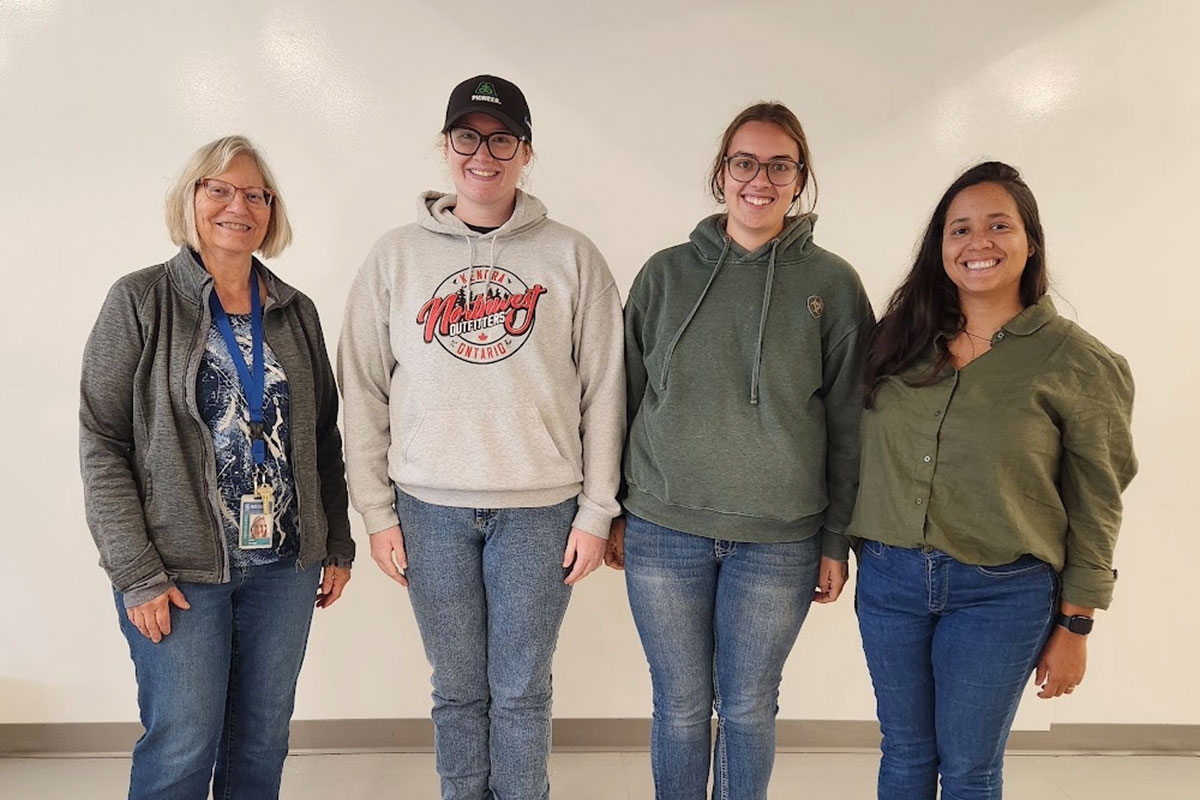
They were able to observe and get hands-on experience with cattle data collection, including body weights, ultrasounds and fecal sampling. Additionally, they assisted with virtual fencing research and were able to help move grazing paddocks using the online app instead of herding at the College’s Pitstra property. They also spent time with the Olds College Centre for Innovation’s Smart Agriculture Applied Research team and the Environmental Stewardship team, exploring the campus and learning about the research projects in progress and the innovative agricultural technologies our teams work with.
Isabell and Ireland also got the chance to present their Master’s program research to Olds College staff. Ireland’s research, Examining Greenhouse Gas Emission Intensity of Beef x Holstein Steers and Holstein Steers Fed Post-wean to Finish examined the hypothesis that breeding Holstein dairy cows with Angus beef bulls would result in crossbreds that gain weight faster than standard Holstein cattle raised for beef on feedlots, leading to lower overall greenhouse gas emission intensity and diversified revenue streams for producers.
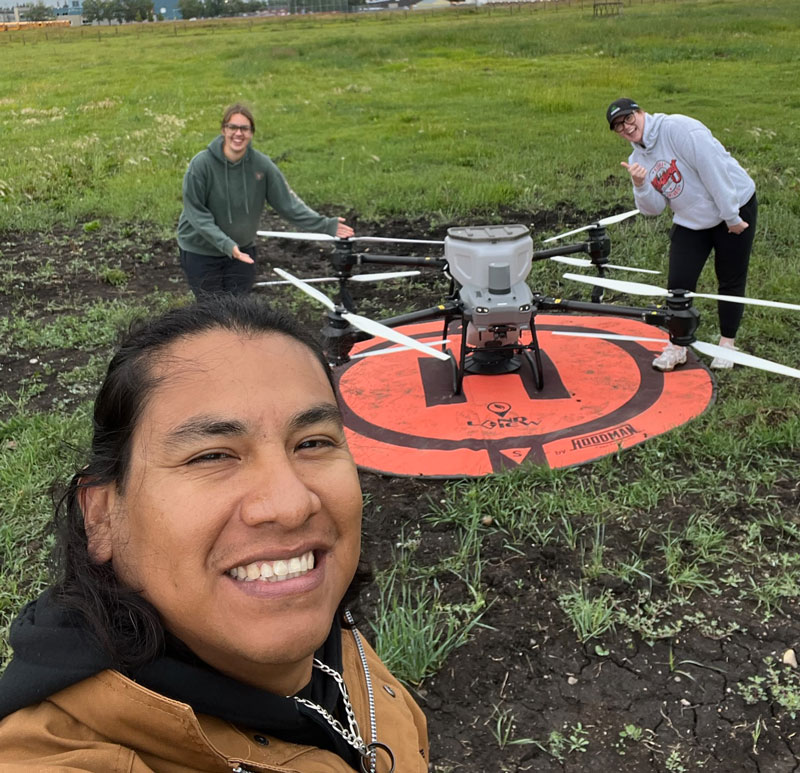
Isabell’s research, Modelling Drought-Related Changes in Forage Yield and Quality and its Impacts on Greenhouse Gas Emissions in Cow-Calf Production Systems, uses the HOLOS model to examine how drought conditions and mitigation strategies could impact emissions and revenue for cow-calf production. This could inform producers about the potential outcomes from various drought mitigation strategies.
Both students shared their findings and answered questions from Olds College staff. They expressed that their time visiting Olds College had been really interesting and informative, allowing them to see a range of research technologies that they had not been exposed to before, definitely stating that they would recommend the TACLP internship program to others.
The TACLP aims to continue welcoming postgraduate students for on-campus internships in the future. To learn more about the opportunities available, please visit oldscollege.ca/TACLP or email the TACLP Manager, Irene Wenger, at iwenger@oldscollege.ca.
The Smart Farm is working towards providing producers with real-life applied research to help them make informed decisions about implementing technology in their own operations.