
Olds College Centre for Innovation (OCCI) is leading a three-year NSERC Applied Research and Development (ARD)-funded project in collaboration with Highfield Investment Group (HIG), CIMA+ and Mount Royal University. The project focuses on the High Plains Industrial Park (HPIP) cascading wetland pond system, which functions as a gravity-fed, Free-Water-Surface Wetland (FWSW) system for stormwater treatment.
Funders/Partners: NSERC Applied Research and Development (ARD) Grant; Highfield Investment Group (HIG); CIMA+; Mount Royal University.
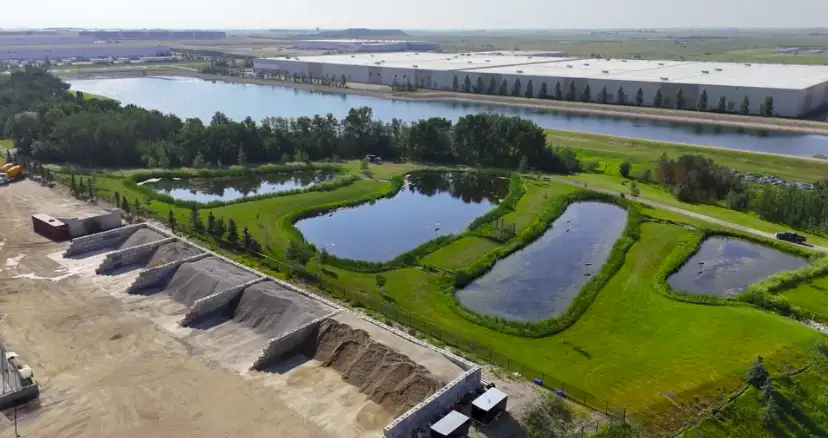
Stormwater runoff can carry sediments, nutrients, salts, organic matter and other contaminants into the cascading wetland ponds. These inputs can contribute to water-quality exceedances and seasonal algal blooms.
This project will evaluate how fixed seasonal flow rates affect hydraulic retention time, nutrient cycling, contaminant removal and algal response. The results will help identify an optimal flow regime to improve water-quality performance and support cost-effective stormwater management.
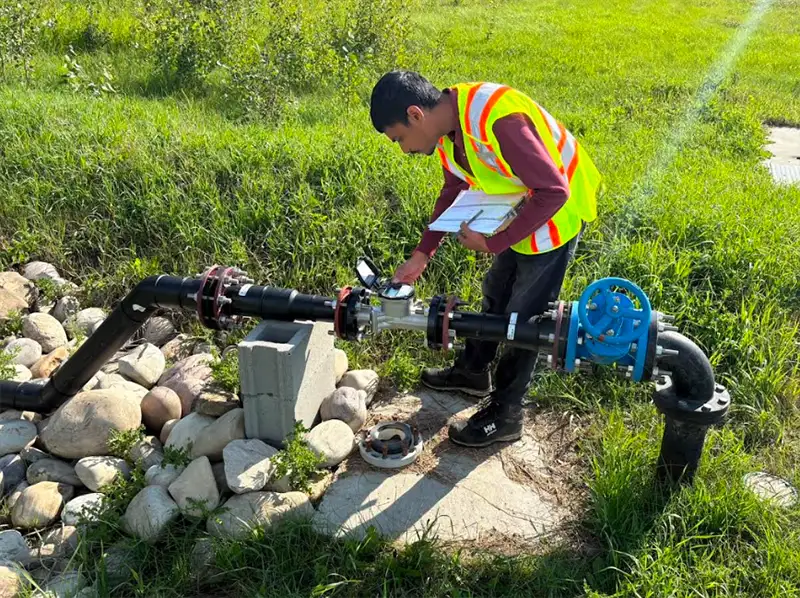
The project will generate practical stormwater management recommendations for HPIP and provide applied knowledge that may be useful for other constructed wetland, industrial stormwater, municipal stormwater, agricultural dugout and wetland treatment systems.
The project also supports student training and applied learning opportunities in hydrology, environmental monitoring, water-quality assessment and sustainable water management.