
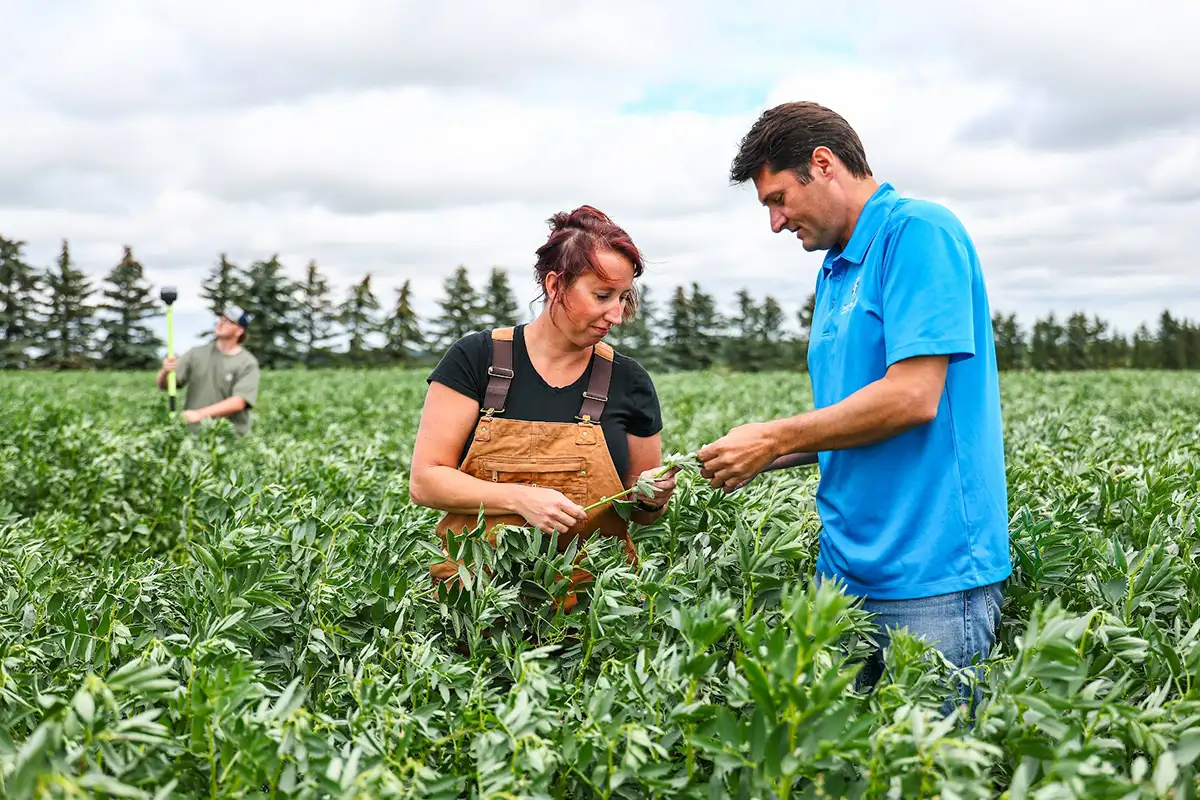
Olds College Centre for Innovation (OCCI) launched a research project in 2025 that aims to give Western Canadian producers the insights they need to make more informed seeding decisions for faba bean production. The one-year initiative will evaluate how different opener configurations and seeding rates influence early plant development, canopy characteristics, flowering behaviour and yield.
Faba bean production is an increasing but specialized segment of Western Canadian agriculture, offering a valuable rotational crop for producers. As a high-protein pulse, faba beans are well-suited to the region’s cooler, more moist agricultural zones, particularly in the central and northern parts of Alberta, Saskatchewan and Manitoba. This crop is known for its exceptional nitrogen-fixing capabilities, which can reduce the need for synthetic nitrogen fertilizers and improve the soil for subsequent crops like cereals.
However, faba beans are also a long-season crop, making them susceptible to challenges like late-season heat or early frosts, which can impact yield and quality. Seeding decisions are particularly critical, as early planting is generally recommended to maximize yield potential and ensure the crop matures before fall frosts. Research is ongoing in the region to address production challenges, including optimizing seeding dates, rates and disease management strategies, all with the goal of providing producers with the information they need to make more profitable and sustainable choices.
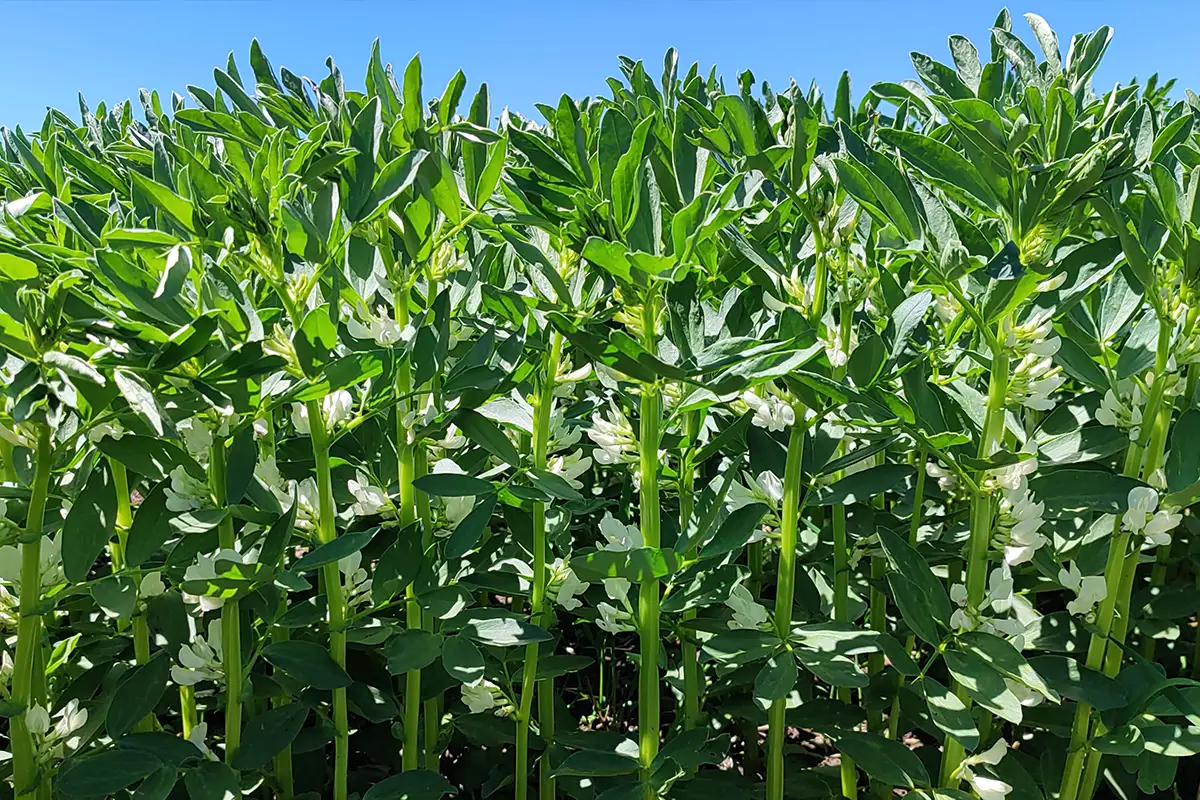
In 2025, OCCI evaluated how single vs. paired row openers and two seeding rates (180 lb/ac and 240 lb/ac) affect faba bean growth, canopy development, and yield. The study found that seeding rate had a greater impact than opener type, with lower rates producing thicker stems, more pods, and more abundant flowering, while higher rates increased plant density but reduced individual plant performance.