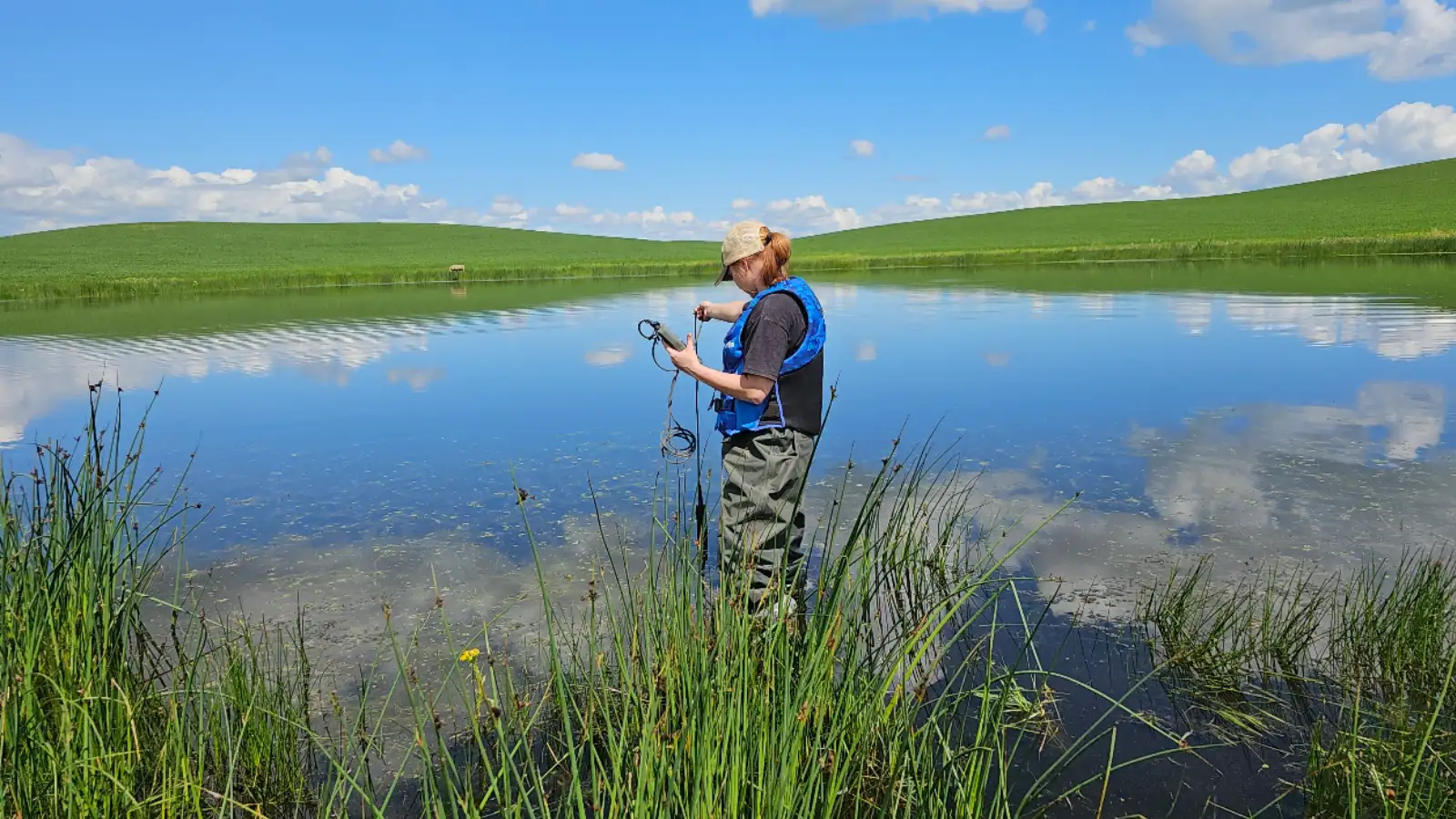
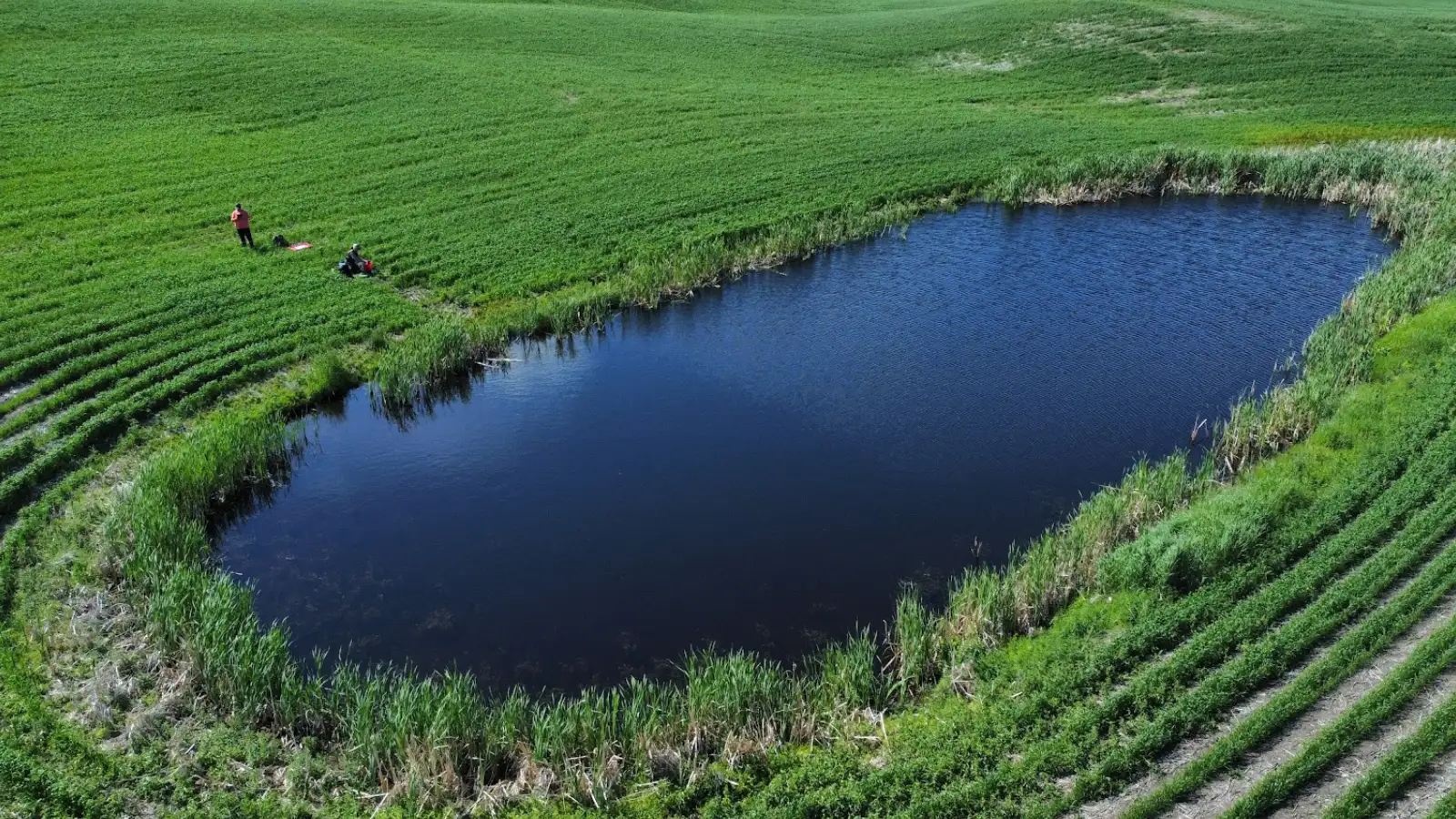
In partnership with Ducks Unlimited Canada and funding from Alberta Land Institute, researchers from Olds College of Agriculture & Technology are assessing how fertilizer rates on farmland impact the water quality in nearby wetland areas. Fertilizer runoff from agricultural fields impacts the plants, invertebrates and wildlife within wetlands located on that agricultural land.
This proof of concept project, which began in 2026, explores the use of variable rate fertilizer (VRF) applications on cropped fields as a way to boost profit and sustainability, by examining the impacts of fertilizer application strategies on wetland water quality. If VRF strategies reduce nutrient loading of prairie wetlands, this work may lead towards informing policy to promote and incentivize VRF within Canadian Agriculture.
Researchers are sampling water quality for common fertilizer macronutrients multiple times throughout the growing season across 19 wetlands in central Alberta. These wetlands are categorized by three treatments: seven surrounded by fields where the VR fertilizer strategy is conducted, seven surrounded by fields where flat rate applications of fertilizer are taking place and five in grasslands where no fertilizer applications are taking place.
The project will analyze how those fertilizer application strategies impact wetland water quality, laying the ground for further research.