
Imagine a classroom that has simulations, challenges and scenario-based activities aimed at pushing students to think outside the box.
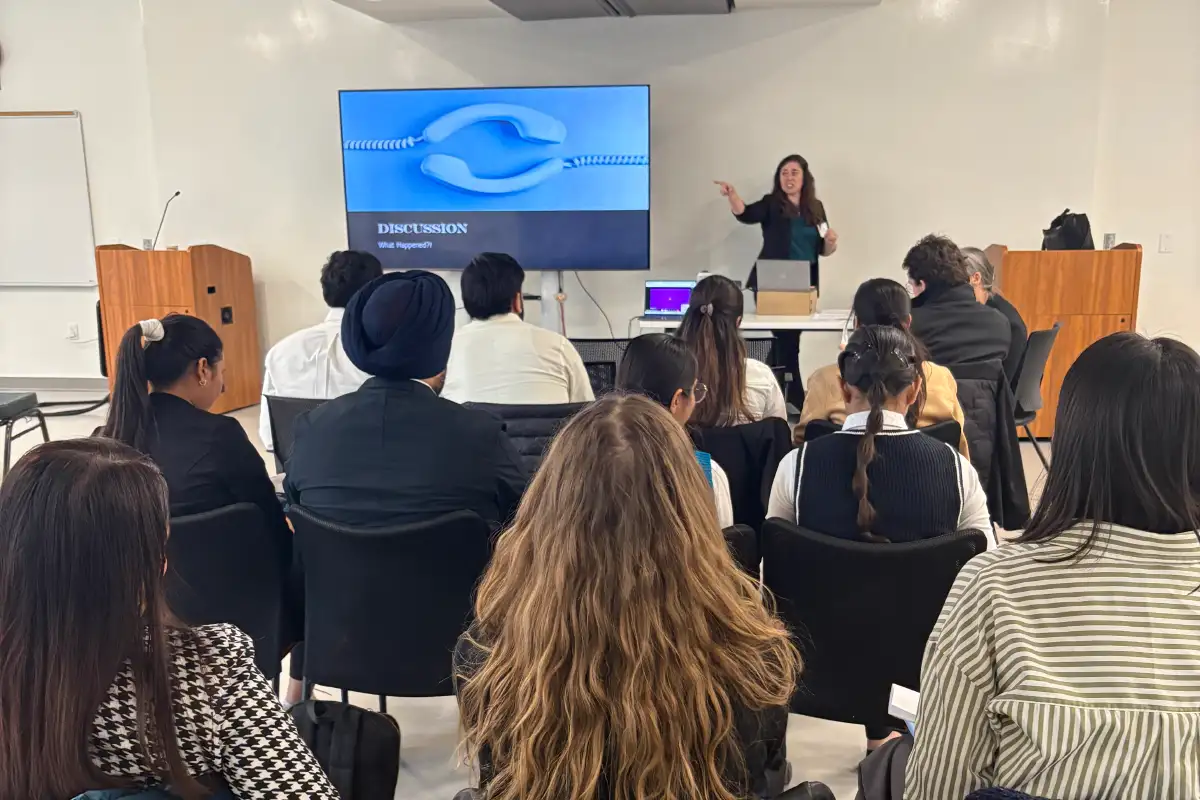
In business courses taught by Jennifer Hainsworth, Instructor, Olds College of Agriculture & Technology, she uses gamified lessons intentionally designed to be novel and out of the ordinary to create an emotional connection for students in class.
By using gamified lessons, or referred to in class as “missions,” she is testing how these lessons impact students' learning experience in her research project, Exploring the MasterMind Method: A Gamified Experiential Learning Framework to Teach Critical Thinking in Undergraduate Business Students.
Rather than “games” in the traditional sense, the method emphasizes decision-making under pressure, purposeful play, teamwork and structured reflection to develop critical thinking in a meaningful, applied way. After completing each mission, students reflect on the skills that they used during the process. These skills are drawn from a framework aligned with the competencies required in that specific area of business. The class then focuses explicitly on the transferability of those skills and how they apply in real-world business contexts.
The motivation for this research stems from a desire to move beyond passive learning and better prepare students for real-world problem-solving. Hainsworth wanted to explore whether intentionally designed, game-based learning environments could improve students’ critical thinking skills, engagement and the transferability of those skills to applied business contexts. While many students can memorize content, they often struggle to apply that knowledge critically in unfamiliar situations or transfer learning from one context to another. Research shows that experiences that are new, uncommon or unexpected are more likely to be remembered than routine classroom activities.
 During one of the gamified lessons, students used a virtual reality simulation and were put into hard business situations. A student mentioned that it was one of the most frustrating situations they had been in, and that is what Hainsworth wanted to achieve – putting them in a real-word situation to apply their skills and use critical thinking.
Hainsworth began piloting ideas related to this framework in September 2024. When it became clear that this approach was resonating with students, she decided to formally develop the framework and evaluate its effectiveness through research. After applying for an Olds College Seed Grant and receiving funding, the research officially began in May 2025 and was embedded in undergraduate business courses at Olds College. Currently in the active data collection and evaluation stage of research, the project is being conducted as a Scholarship of Teaching and Learning (SoTL) study, comparing gamified instructional methods to more traditional lecture-based approaches.
Early observations suggest higher levels of student engagement, collaboration and willingness to take intellectual risks compared to traditional classroom formats. Students appear more motivated to participate, more confident in articulating their reasoning and more capable of critically assessing situations. They have also demonstrated a stronger ability to transfer knowledge gained in one area to new business contexts.
Hainsworth will be presenting this research project at the Alberta Colleges and Institutes Faculties Association (ACIFA) conference this May, and plans to continue data collection and analysis of student outcomes.