
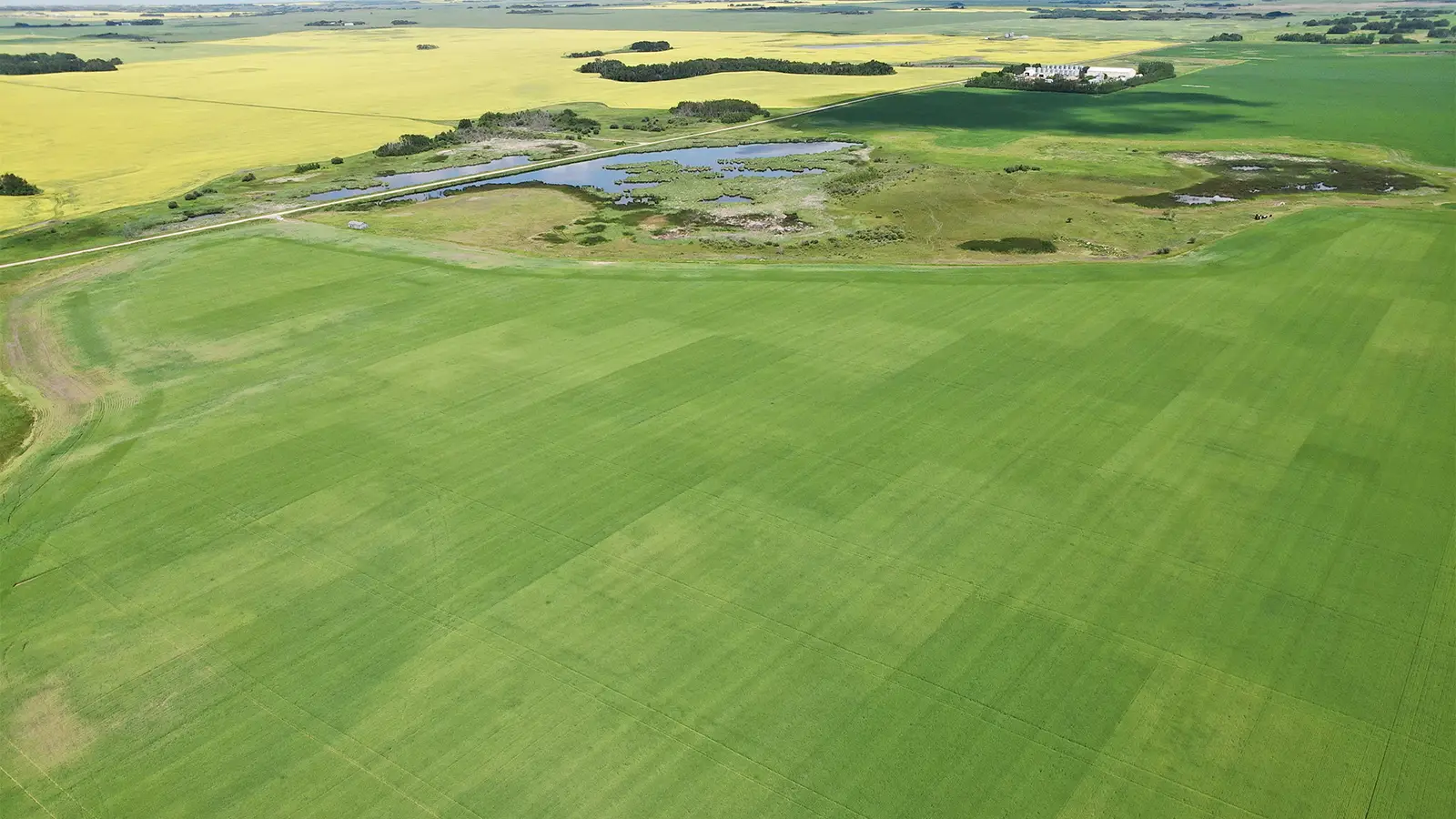
Olds College Centre for Innovation (OCCI) and Alberta Grains are collaborating with producer partners to continue trialling the On-Farm Precision Experimentation (OFPE) research methodology across Western Canada. The OFPE methodology is defined by Data-Intensive Farm Management (DIFM), testing variable seeding and nitrogen application rates to determine the economically optimal product rates for individual fields.
The DIFM platform uses machine learning to design and analyze field-scale checkerboard or Latin square plot trials, providing actionable insights into crop yield responses. Led globally by Dr. David Bullock at the University of Illinois, DIFM field trials give producers data-driven recommendations tailored specifically to their soil and growing conditions.
Funders/Partners: RDAR, Alberta Grains
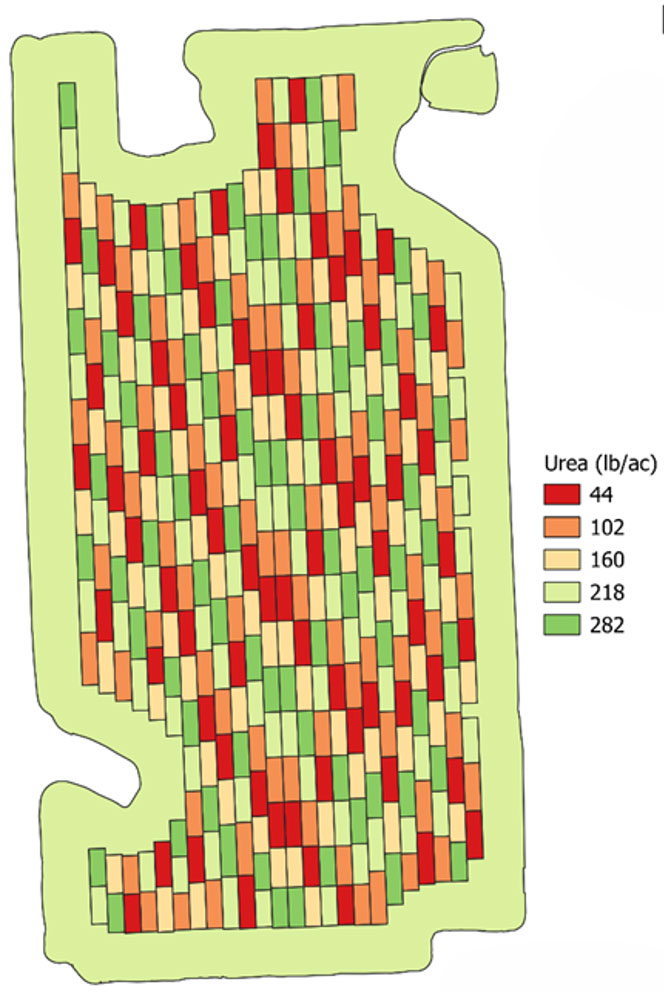
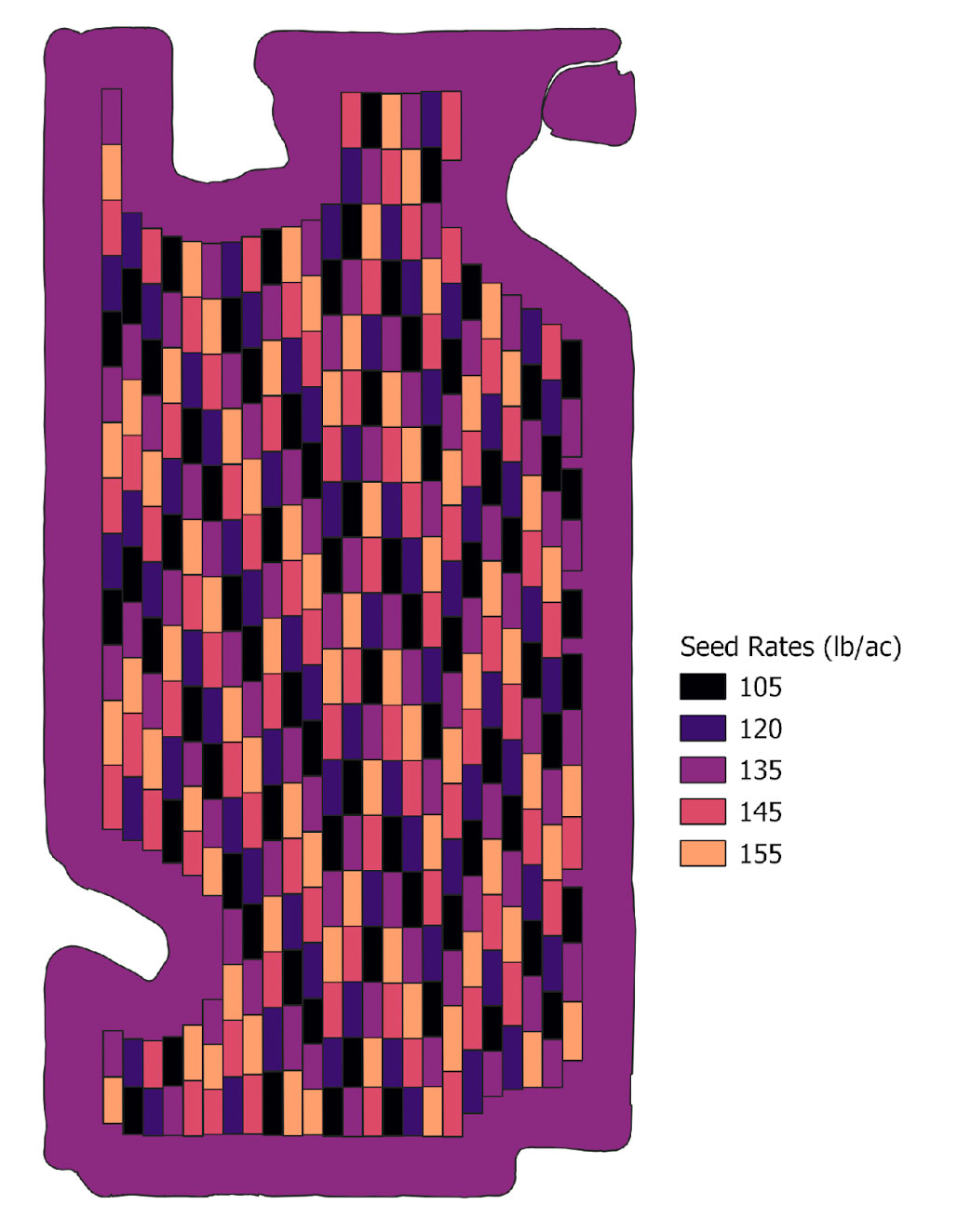
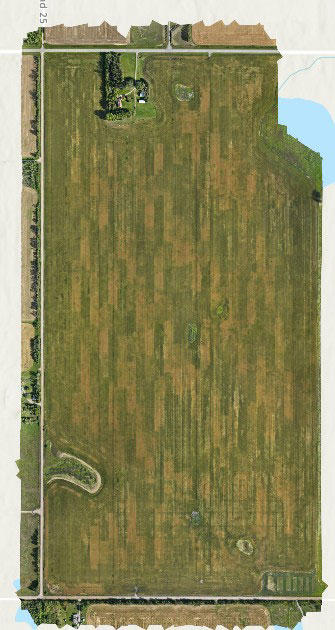
Over the 2024 and 2025 growing seasons, the OCCI research team gained extensive operational experience implementing and evaluating the DIFM platform in spring wheat crops across producer fields in central Alberta, conducting four trials in 2024 and expanding to 10 in 2025.
Of the ten trials where nitrogen rates were tested, six trials revealed that the economically optimal nitrogen rate was below the producer’s status quo rate (identifying opportunities to reduce fertilizer input costs without sacrificing net return). Four trials indicated the status quo rate was underapplying nitrogen to achieve an economically optimal yield.
Among the 13 wheat seeding rate trials, nine showed an economically optimal seed rate below the producer’s status quo rate, one trial showed an optimal rate above the status quo rate and three trials confirmed that the producer’s existing status quo rate was already economically optimal.
Across the 23 input-by-trial combinations evaluated (10 nitrogen, 13 seeding), 21(91%) showed a significant relationship between the optimal rate and within-field terrain. This provides strong evidence that, for the fields in this network, the economically optimal input rate is not uniform across the field, supporting variable-rate management as an applicable strategy for Alberta spring wheat production under the conditions evaluated.
Building on the success and learnings of the initial trials, a second project has been approved and funded for the 2026 and 2027 growing seasons. This new project is expanding geographically and across crop types into both wheat and barley across Alberta and Saskatchewan. The team is aiming for 25 trials in Alberta each year, five trials in Saskatchewan in 2026 and 10 Saskatchewan trials in 2027.